We're packing, putting things in storage, painting and cleaning as a prelude to putting our house on the market. This all happened quickly, and we haven't had much time to prepare...and we really need to be finished by Monday night. This gives us a nice ending: whatever we've accomplished by Monday night, that's what we're going to have done. The end. The deadline defines the goal.
Sometimes I wish writing were like that. Due to a family trip, and now this real estate hulabaloo, I've had to neglect my novel. But I've been thinking about it, and I know where it's headed now, and what the ending will be, and how much more I have to write. Sometime this spring, probably in May, I'll finish.
But of course not really. I already know of some things that will have to be added, and some that will be cut. I'm already making these changes in my head. Generally, I do a draft, then I spend a week at the coffee shop with a red pen, and then over the next month I do another draft. Then I give it to Rhian, Ed, Bob, Brian, and/or some other people, and they give me comments, and then I do another draft and send it to my agent.
And then if I'm lucky a publisher picks it up, and I do a major overhaul, and then a minor one, and then copyedits, then page proofs, and then galleys. And even if the thing makes it all the way into a bookstore, it doesn't really feel finished. It was, is, and always will be a sort of nebulous imaginary thingness without real boundaries. It's a big sloppy idea. It's never quite real, and it's never quite done.
My youthful vision of book publishing comes from the ending of Back To The Future, when Crispin Glover's big boxful of his latest science fiction hit arrives, and everyone beams, except for Michael J. Fox, who is still rattled from having come a little too close to porking his own mom. The truth, however, is much more complicated, and ultimately more interesting. I wish I could experience that theoretical rush one is supposed to get upon "finishing," but I guess I prefer the geeky pleasures of the endlessly unfolding process.
Friday, April 6, 2007


Thursday, April 5, 2007
Audio Podcast: Emily Rosko
Rhian's right, Ward Six is indeed tired. The self-storage warehouse is giving us some highly amusing short story ideas, though. Stay tuned.
Meanwhile, I just posted an interview with poet Emily Rosko. She was born in Pennsylvania, grew up in the Midwest, and later taught English in Siberia. A recipient of the Stegner, Ruth Lilly, and Javits fellowships, she holds degrees from Cornell and Purdue universities. Her poems have appeared in journals such as Another Chicago Magazine, The Beloit Poetry Journal, and Denver Quarterly, and her new book is Raw Goods Inventory. We talked about her book and how it came together, the efficacy of creative writing programs, how what's not in a poem is as important as what is, and people who talk too much. Check it out at the Writers At Cornell blog.
Wednesday, April 4, 2007
Ward Six Seems A Little Tired

JRL and I aren't doing much reading this week. In fact, we're doing the opposite: we're removing books from our house on orders from our real estate agents -- they take up space that prospective buyers might wish to imagine a dining room table in. Our library currently stops at "I."
Strangely, this activity seems to have shrunk the bookish part of my brain. Can it be that the physical presence of books makes a person think about them, read them, have ideas about them? If so, that would be a good argument against the eBook.
Or maybe I'm just pooped from all the cleaning.
In any event, this is temporary. If our lucks holds, soon someone will agree to buy this place and we can haul our books back from the storage space at the edge of town, where they are being guarded by a man with a limp and a tiny earring and a Weird-Al-Yankovich-style hairdo.
Monday, April 2, 2007
Tools For Serious Readers, Eh?
 OK, so this is where I am supposed to say how loathsome the Levenger catalog is. And, all right, I'm saying it. It's loathsome.
But wow, that doesn't feel too good. It's true that this catalog of reading and writing accoutrements represents the complete capitulation of the literary impulse to vulgar materialism. Take for instance this paragraph, an introduction to the "Reading Tools" section of the Levenger website:
Make your reading more enjoyable by using a book holder, bookmark, or book weight designed with you in mind. Display your favorite novels with one of our unique bookends. Shop our collection of useful reading accessories including magnifiers, clips and cutters, and products designed for reading in bed.
"Display your favorite novels?" Ew. So that's what it's all about, eh, proving to your friends that you enjoy the finer things in life, like say the latest Nora Roberts or Christopher Hitchens. Ay caramba. And "products designed for reading in bed." These turn out to include the "Laplander" lap desk, the "Laplighter" clip-on lamp, a two-hundred-dollar cashmere blanket, electric lights that look like candles (sort of), a two-hundred-dollar bed tray, and, I shit you not, a $250 reading lamp. To look at this page is to imagine oneself nearly crowded out of bed by one's possessions, like a three-year-old with his stuffed animals.
Except that, you know, some of it looks kinda cool. Especially those blankets. Wow. Curled up under one of those babies with some serial killer novel propped up on my chest...ooh yeah!
Because, disgusting as it is to think of reading as a fetish...it kind of is. Especially the reading of fiction, which brings you so deeply into the lives of others--more deeply than you can ever get into anyone real, anyone whom you actually know, including your spouse, or your kids. Novels let you read minds.
And writing the things is worse still--getting into people's heads, and then making them think things. Evil things. Crazy things, sexy things. You writers know what I'm talking about--there is something...stirring about fiction writing. One is prone to bouts of sudden and disturbing arousal. At least I am.
Did I just admit that?
So look here, if I feel the need to get it on, or make some people I made up get it on, while sitting in a Leather Freedom Desk Chair W/Neck Support (Classic) to the tune of $1,448, and if you happen to have a problem with that...well...you just don't get it, man. I'm a serious reader.
Sunday, April 1, 2007
Never Let Me Go
I read Kazuo Ishiguro's Never Let Me Go recently, and loved it, but when I recommended it to friends I generally found that people didn't like it as much as I did. They complained that it was boring -- okay, I could see that: its pace is patient and quiet -- or that the "big secret" of the novel was obvious. I'm not going to supply any spoilers, here, but the slow and inevitable realization about what that secret is was one of the great pleasures of that book for me. I don't think it's supposed to be a surprise. The way the reader grows accustomed to the strangeness of the secret mimics the way the characters in the book's alternate reality must also have grown used to it.
But I also liked Ishiguro's fastidious building of his world -- the peculiar ordinariness of it. The only other Ishiguro I've read is The Remains of the Day, which I read maybe fifteen years ago, out loud, on a road trip. All that sticks with me from that reading is the voice of the butler and its sense of restrained emotion, both of which are echoed in Never Let Me Go. JRL suggested I also read The Unconsoled, but I couldn't get past the dream-like elevator scene that that book opens with, and When We Were Orphans, which I put down about half-way through and haven't picked up again.
Ishiguro does something really weird in his books -- at first I thought it was just a tic of Never Let Me Go's narrator, Kathy H., but he does it in When We Were Orphans, too, which is one of the reasons I stopped reading it: at the end of sections or chapters he'll give a broad and deliberately suspenseful hint about what's to come. For example, from NLMG:
And then after the white space he goes on to describe what did happen that day at the pavilion. It wouldn't be a problem if he did it once or twice or even three times, or even if he did it compulsively in one book -- but when I found that this stylistic quirk crossed into other books (and it's in The Remains of the Day, too, though I didn't notice it when I read it) I found it extremely annoying. Is Ishiguro afraid people will quit reading if they're not promised some tempting nugget in the next section? Does he even know he's doing it? It feels like a device he learned to get himself from one plot point to the next, but it's something he ought to be able to put away at this time in his career. How many Booker nominations does he have?
But I also liked Ishiguro's fastidious building of his world -- the peculiar ordinariness of it. The only other Ishiguro I've read is The Remains of the Day, which I read maybe fifteen years ago, out loud, on a road trip. All that sticks with me from that reading is the voice of the butler and its sense of restrained emotion, both of which are echoed in Never Let Me Go. JRL suggested I also read The Unconsoled, but I couldn't get past the dream-like elevator scene that that book opens with, and When We Were Orphans, which I put down about half-way through and haven't picked up again.
Ishiguro does something really weird in his books -- at first I thought it was just a tic of Never Let Me Go's narrator, Kathy H., but he does it in When We Were Orphans, too, which is one of the reasons I stopped reading it: at the end of sections or chapters he'll give a broad and deliberately suspenseful hint about what's to come. For example, from NLMG:
And if these incidents now seem full of significance and all of a piece, it's probably because I'm looking at them in the light of what came later -- particularly what happened that day at the pavilion while we were sheltering from the downpour.
And then after the white space he goes on to describe what did happen that day at the pavilion. It wouldn't be a problem if he did it once or twice or even three times, or even if he did it compulsively in one book -- but when I found that this stylistic quirk crossed into other books (and it's in The Remains of the Day, too, though I didn't notice it when I read it) I found it extremely annoying. Is Ishiguro afraid people will quit reading if they're not promised some tempting nugget in the next section? Does he even know he's doing it? It feels like a device he learned to get himself from one plot point to the next, but it's something he ought to be able to put away at this time in his career. How many Booker nominations does he have?
Friday, March 30, 2007
Barthleme Online
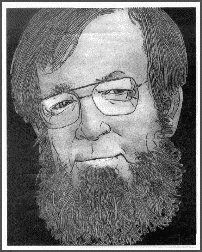 So I assigned a short story for my graduate workshop to read, by a writer I won't name but whose fiction, which I found unappealing before, I thought deserved a second chance. I read the story and found my original opinion confirmed: Bad Barthleme.
Donald Barthleme was a wonderful fiction writer, essayist, and critic active in the 1970's and 1980's; he followed in the footsteps of the Oulipians as an "experimental" writer who was as funny and engaging as he was innovative. His selected-story collections 60 Stories and 40 Stories are among my favorite books by any 20th Century American writers. Barthleme died young but left behind several careers' worth of great writing, and he was, and is, a major influence on my own work.
I showed up for class and asked the students--what did you think? One of them, Alexi Zentner, immediately said "Bad Barthleme."
In this case, most of the class agreed, and that got me thinking it was time to go read some good Barthleme. My students informed me that a great deal of Barthleme was now available online--a blogger named Jessamyn Charity West got permission from Barthleme's estate (specifically his brother, the writer Frederick Barthelme) to post a bunch of stories, and they're free for the reading now.
It's hard to pick favorites, but I can't resist linking to the hilarious Some Of Us Had Been Threatening Our Friend Colby--I'm going to assign it to my undergraduates, most of whom haven't yet had their first contact with this endlessly rewarding writer. Huge thanks to Jessamyn and Frederick Barthleme for making this work available for free--I can't believe it took me this long to find out about it.
Thursday, March 29, 2007
Who Remembers Laurie Colwin?
When Laurie Colwin died in 1992, at the age of 48, she left those of us who followed her work with the sense that her best stuff would now never be written. She was never my very favorite writer, but she was good, she was solid, and she had a very specific sensibility. The first book of hers I read, Happy All the Time, was, in fact, about happiness -- and I remember being surprised to discover that happiness could even be the subject of literature, and it didn't have to be cloying. That was a revelation to me, a big Raymond Carver junkie.
But her novel Shine On, Bright and Dangerous Object is the one I return to most often as an example of a perfect short novel. It's about a young woman whose husband dies in an accident and how she takes up with her husband's brother. It's absolutely unsentimental, even wry and witty. Colwin never wrote self-consciously or in a style as so many of her 80's contemporaries did (Beattie, Carver, Hempel, Moore), but she had a light touch with characters that was ultimately quite distinctive.
Short novels (Shine On is just short of 200 pages) really are a genre of their own. The novella has never really taken off as a form (quick, name five great novellas!) but posing as real novels, short novels have managed to do something somewhat different. They work more like long short stories, in that their curve is tight -- just larger.
Another writer I first read around the same time as Laurie Colwin is Lynn Sharon Schwartz, who's still writing and recently wrote a 9-11 novel. Her book Rough Strife is one of the best novels about a marriage I've ever read. I wonder if it's possible to write well about a marriage without basing it on one's own...
Wednesday, March 28, 2007
Audio Podcast: Sandra Gilbert
I just finished speaking with poet, critic, essayist, and teacher Sandra Gilbert. She has published seven collections of poetry, including the recent Belongings; she is also the co-editor of The Norton Anthology of Literature By Women and coauthor of the celebrated The Madwoman in the Attic: The Woman Writer and the 19th-century Literary Imagination. Her awards, honors, and critical publications are truly too numerous to list. We discussed why the sonnet still has life left in it, the emotional fallout from September 11th, our Sicilian forebears, and the poet's role in a violent culture. This was a really great talk--check it out at the Writers At Cornell Blog.
Tuesday, March 27, 2007
Books As Art (And Other Things)
 The Make Magazine blog has a post up today about the book sculptures of a guy named Tim Baker, who is also a makeup artist (check out the gruesome pics on his site). This got me thinking about books as physical objects, and the uses to which they're put. I for one use books in my home studio as sound diffusing material--I mean, why pay hundred of dollars for these when you've already got the equivalent lying around the house?
You could check this out, too, some bookshelves made out of books. Here's a guy who made the world's largest book, and if it's tiny books you're after, you could join the Miniature Book Society. I'm also reminded of Tom Phillips' book A Humument, which was created by selectively obliterating, in various artistically compelling ways, some of the words of an already published book.
Finally, here's an article about a sculpture, commissioned by Cornell, the college where I teach, that's made entirely of faculty publications. I missed the boat on that one, but I must confess that I have quite a few such "sculptures" all over my office just now.
If you've seen some good extra-literary uses for books, post a link in the comments.
Sunday, March 25, 2007
Ben Marcus on Lydia Davis
So our friend Jeffrey Frank, apropos of nothing, suddenly got us a gift subscription to Bookforum...thanks dude! Bookforum is an arm of the art magazine Artforum, and judging by this one issue, I don't think it's quite as satisfying as its sister...it seems to be striving, on one hand, for a New York Review of Books feel, but can't resist throwing in a little dash of Entertainment Weekly here and there, as in the very silly Literary Calendar column, with its fey segues and disembodied floating head graphics, or in the dorkily punning article titles. But overall it's a solid mag and a fine addition to the coffee table.
The current issue has a review of the new Lydia Davis, Varieties of Disturbance. I'm glad to see this, because Davis is one of our favorite fiction writers ever, and her recent Proust translation pretty much kills every other one on the planet. Ben Marcus, the reviewer, likes the book, and I'm glad; and I'm glad to see Marcus writing about it, because I think Marcus's nonfiction is excellent.
But he says something weird at one point, before quoting a highly restrained passage from one of Davis's stories:
B-b-b-but it does, it totally does! Here's part of the passage:
See, to me, that is just packed with emotion. I picture the author sitting perfectly still, her hands folded, looking like she's going to explode at any second--Davis is intentionally writing as though she is a very precocious child grappling with feelings too huge to put into words.
Now, granted, I haven't read the whole thing yet--and Marcus does get around to saying that Davis indeed packs her fiction with emotion, in her own way. But the funny thing is, the description Marcus initially offers seems closer, to me, to a description of Marcus's fiction--indeed, his books are so bullheaded I can't get through them.
Are we all doing that? Seeing ourselves in the books we read, and taking writers to task for seeming to be like us? The prospect is depressing. I think maybe I am, anyway--my last couple of book reviews, when they were critical, were critical of things I myself am often guilty of, like excessive jokiness or overly loose structure. I didn't realize this until they were published.
In all fairness, Marcus isn't really taking Davis to task at all--he greatly admires her, as he should. As do I. As should you. And when I read the new book, I'm going to try to avoid seeing my goony mug glaring back from its pages.
The current issue has a review of the new Lydia Davis, Varieties of Disturbance. I'm glad to see this, because Davis is one of our favorite fiction writers ever, and her recent Proust translation pretty much kills every other one on the planet. Ben Marcus, the reviewer, likes the book, and I'm glad; and I'm glad to see Marcus writing about it, because I think Marcus's nonfiction is excellent.
But he says something weird at one point, before quoting a highly restrained passage from one of Davis's stories:
The remarkably bullheaded story "Jane And The Cane" doesn't give an inch toward the acknowledgement of emotion...
B-b-b-but it does, it totally does! Here's part of the passage:
Mother could not find her cane. She had a cane, but she could not find her special cane. Her special cane had a handle that was the head of a dog. Then she remembered: Jane had her cane...Mother called Jane. She told Jane she needed her cane.
See, to me, that is just packed with emotion. I picture the author sitting perfectly still, her hands folded, looking like she's going to explode at any second--Davis is intentionally writing as though she is a very precocious child grappling with feelings too huge to put into words.
Now, granted, I haven't read the whole thing yet--and Marcus does get around to saying that Davis indeed packs her fiction with emotion, in her own way. But the funny thing is, the description Marcus initially offers seems closer, to me, to a description of Marcus's fiction--indeed, his books are so bullheaded I can't get through them.
Are we all doing that? Seeing ourselves in the books we read, and taking writers to task for seeming to be like us? The prospect is depressing. I think maybe I am, anyway--my last couple of book reviews, when they were critical, were critical of things I myself am often guilty of, like excessive jokiness or overly loose structure. I didn't realize this until they were published.
In all fairness, Marcus isn't really taking Davis to task at all--he greatly admires her, as he should. As do I. As should you. And when I read the new book, I'm going to try to avoid seeing my goony mug glaring back from its pages.
Saturday, March 24, 2007
Buying Books
Books are too freaking expensive. For years I didn't buy any new hardcover books, except for gifts, but managed to fill all available book shelves with used books and paperbacks. (My book-storage secret: build a long shelf all the way around a room at the top of the windows. It's wasted space -- you might as well fill it with books.)
Then I started working at an independent bookstore. It's bad enough that I spend the day handling and shelving and flipping through all the cool new books, but I get a discount AND feel like I'm supporting the store when I buy books. I no longer have any resistance whatsoever. It feels almost like a compulsion, like gambling.
Today, even though I'm still reading The Lay of the Land and De Lillo's Falling Man and Julian and George and The Prime of Miss Jean Brodie and Jenny Diski's Stranger on a Train, I bought a new book that I found mysteriously irresistible: Tom McCarthy's Remainder. I'd never heard of the guy, or the book, but every page I opened to seemed full of great little bits and small thrills. I can imagine one might experience the same sense of impending pleasure when buying a lotto scratch ticket.
I'll tell you what it feels like: it feels like all the books are going to disappear and I have to gather as many as possible before they're gone. It's nuts, I know. But there is definitely something in the air.
Friday, March 23, 2007
My B-List
I liked Rhian's ranking post, but I want to focus a moment on the B-list. For me, the B-list is inherently more interesting than the A-list--it holds unexpected treasures, books that other people might not have read. It's something you can talk about (or, of course, blog about). What's the fun in recommending Anna Karenina to somebody? I mean, duh.
But when you press upon your friend a copy of, say, G. K. Chesterton's The Man Who Was Thursday, or Maj Sjöwall and Per Wahlöö's The Laughing Policeman, or Stanislaw Lem's Fiasco, you may have a friend for life. Or perhaps an enemy. The B-list is where the vagaries of taste begin to creep in; whether people like a B-list book or not actually tells you something about them. Whereas, you know, of course they like Hamlet. (Indeed, we don't even need a hyperlink.)
This is why I'm going to add, below the blogroll on the left-hand column, a new feature of links to B-list books. You may consider these W6 recommendations, though we cannot be held responsible for your reaction to them. (We would be as delighted, however, to learn that you threw one across the room as we would to learn you liked one.)
Sorry for the blank days! We were on the road.
Wednesday, March 21, 2007
Ranking Favorites
We took the kids to Disney World recently, and as a way of talking about the experience I asked them which ride was their "favorite." Immediately I felt I had made a mistake -- asking children to put diverse experiences into a hierarchy probably flattens it for them. Anyway, since when have I ever been able to say what my favorite of anything is?
But I do have favorite books, if not a favorite. Eudora Welty's The Optimist's Daughter is one; I was reminded of it when I spotted a copy in JRL's grandmother's condo. She had it because her rabbi's wife thought we'd like it. It seems crazy that a person could just forget about a favorite book, but I did. How many more books out there have I forgotten about that are as good as that one? I could never just sit down and make a list. I'd forget too many.
So a hierarchy is out of the question, but I think it's possible to put all my favorite books into two groups -- an "A" list and a "B" list. The A list would include the best books I've ever read: the powerful, life-changing ones like Lolita and Moby Dick and Anna Karenina and The World As I Found It and Housekeeping. I think this list would have about ten books on it, but who knows what I'm forgetting about.
The B list would be made up of books that I love, but that probably haven't altered my worldview in the same way. For instance, I Capture the Castle and The Illustrated Man and Independence Day and Jesus' Son. This would have about 25 (or maybe 50) books on it, but would be much more subject to change than the A list.
Is this a waste of time? Oh, probably. But I couldn't sleep the other night so I spend a few restless hours coming up with this scheme. I think it has to do with our impending move. What to throw out, what to keep? There's probably a C list -- forgettable books I pretty much enjoyed at the time (She's Come Undone) -- and a D list -- deeply flawed stupid books I couldn't put down (Valley of the Dolls).
Tuesday, March 20, 2007
Sunday Morning, Wednesday Night
Today I read Kim Cooper's book In The Aeroplane Over The Sea, an essay on the the Neutral Milk Hotel album, which I posted about last month. It's a good book, part of Continuum's intermittently terrific 33 1/3 series, and one bit struck me. The second song on the record begins with lead singer Jeff Magnum crying, "I love you, Jesus Christ," and I was a little surprised to learn in Cooper's Book that Magnum meant this entirely in earnest, not merely from a musical character's point of view, and certainly not ironically. One listener is described as having been initially "repelled" by the lyric, and it occurred to me how much of what I consider the best contemporary art, music, and literature is essentially secular, and that religion, in the public sphere, has largely become the provence of authoritarians and political opportunists.
I am not without my own eccentric spiritual awareness, and I am acutely preoccupied with the big questions about human existence. But, institutionally speaking, I'm an agnostic. That said, I am not repelled by earnest expressions of religious faith. I am repelled by the all too common and extraordinarily shrill hypocritical ones--the kinds I was alluding to in the previous paragraph. Mangum's lyric moves me, though, and I started wondering if I could think of any good religious fiction.
Well, Flannery O'Connor. She's the main one. (Her faith is kind of a deal-breaker for some people, but it deeply endears her to me.) Has anyone read Marilynne Robinson's Gilead? I suspect I would like it, having loved Housekeeping, but haven't gotten to it yet. Dostoyevsky, of course. And Rhian likes Ron Hansen's Mariette in Ecstasy. Most others I've tried seem soppish to me--Updike's In The Beauty Of The Lilies is the one that springs most immediately to mind. (I don't dislike Updike, but he bugs me more often than he amazes me. I like Of The Farm and all the Bech stories quite a lot...and his book reviews and other nonfiction. The rest...eh. One of these days I'll post about why Roth is way better at bad men than Updike is, but not today.)
Amen!
Sunday, March 18, 2007
Fiction and Coincidence
A couple of years ago I was having coffee with my friend E. and talking about our respective family histories. I had known her since we had moved into the neighborhood a few years before and knew she was from California, but I didn't know her family ranched in southern California back in pioneer times. So did mine, I told her. Her family was on land that became Camp Pendleton, she said. So was mine!
When I later researched it on the internet, I discovered that when my great-great-grandfather arrived in California in 1884 and began ranching on his homestead, he was sued by my friend's great-grandfather over ownership of the land. My guy won. Later, things turned bad (grasshoppers, horse thieves) and he went into sharecropping for E.'s guy, then got into hotel-keeping. After he died, his wife sold the hotel to a man who abruptly died, too, and then the hotel became a hangout for hoboes. (That's the part I had always known about.) In the 1880 census, E.'s g-grandfather's occupation is "Capitalist."
This would be bizarre coincidence enough -- I only know E. because of the proximity of our houses, 3000 miles from the disputed ranch; it's not as if we found each other in a California pioneers club, or because of a love of horses or hotels -- but about a year ago my friend became a realtor and just the other day she helped us make an offer on a house. If I believed in that sort of thing, I'd say we were working out some kind of karma. And who knows, maybe I do believe it. Mostly I believe that world is big and complex enough so that coincidences are a natural by-product. Mostly.
Anyway, at first I thought that this would make a good story, but then I realized why it wouldn't. Coincidence is fascinating in real life because it hints at a design created for mysterious purposes by an unseen designer. In a book, the designer is not so mysterious -- it's the writer -- and the purpose is usually obvious, too: it's to finish the dang plot.
When coincidence does work in fiction, it's when the characters acknowledge the coincidence and try to figure what's really going on -- then it becomes psychologically interesting and exciting. That's what Paul Auster does in his best work. Other times Auster's characters numbly accept the coincidence and we're supposed to be fascinated. I think not.
I just started reading Richard Ford's new novel about the pre-9/11 period, The Lay of the Land. I liked The Sportswriter and loved Independence Day, and this book continues with the same character, Frank Bascombe, who is a.... real estate agent!
Subscribe to:
Posts (Atom)
